
 Real Estate & Construction
 Heating & Cooling
 Home and Kitchen
 Food & Beverages
 Business and Economy
 Baby
 Industry
 Computer & Electronics
 Garden
 Education & Counseling
 Sports & Recreation
 Pets & Animals
 Health & Beauty
 Tourism & Hospitality
 Fun & Leisure
 Clothing & Footware
 Vehicles & Transportation
 Other

- Gmajna 55, Gmajna, 2380 Slovenj Gradec
- http://www.nieros.com/
- info@nieros.si
- +386 (0)2 88 27 100
English
Word phrases
industrial washer and dryer
,hand washing station
,boots washing machine
,automatic hand washer

Industrial Washer and Dryer Solutions for Enhanced Workplace Hygiene
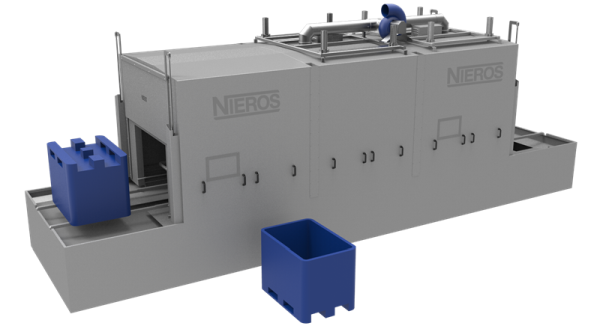
Industrial washer and dryer systems are essential for maintaining a consistently clean and safe production environment in modern industrial facilities, where even minor lapses in hygiene can compromise product quality and operational efficiency. These systems play a critical role in ensuring that equipment such as crates, pallets, tools, knives, and smoke trolleys is thoroughly sanitised, supporting both regulatory compliance and risk reduction.
Industrial washer and dryer technology is designed to handle high volumes of items with precision and reliability, providing a repeatable cleaning process that integrates seamlessly into complex workflows. In addition to equipment hygiene, a comprehensive approach also considers employee hygiene, which is equally vital for contamination control in food processing and other high-risk sectors. By combining advanced machinery with thoughtfully designed personnel hygiene stations, facilities can achieve a fully controlled operational environment that safeguards both product integrity and worker safety.
Ensuring Equipment Hygiene in Industrial Operations
Industrial operations often involve handling materials that can accumulate residues, bacteria, or other contaminants. Modern industrial washer and dryer systems are engineered to address these challenges through high-capacity cycles, automated temperature control, and modular loading options. This equipment is suitable for a wide range of items, including:
- Crates and pallets used in logistics and storage
- Knives, trolleys, and other tools in food processing
- Containers and other reusable handling equipment
By standardising the cleaning of these items, facilities reduce the risk of cross-contamination and ensure that hygiene protocols are consistently met. Integration with conveyor systems and other logistics solutions further enhances throughput and minimises manual handling, allowing personnel to focus on monitoring and compliance rather than repetitive cleaning tasks. The scalability of these hygiene solutions also allows operators to adjust for seasonal demand or changes in production volumes without compromising hygiene standards.
Employee Hygiene with a Hand Washing Station
While equipment hygiene forms the foundation of a clean facility, maintaining personnel hygiene is equally essential. A hand washing station is designed to enforce strict hygiene routines, providing controlled and measurable cleaning for all employees entering sensitive areas. These systems often feature automated dosing, touch-free operation, and compliance tracking to ensure that hygiene standards are not only met but documented.
Introducing a hand washing station as part of a broader hygiene strategy has multiple operational benefits:
- Reduces human error in manual hand cleaning
- Standardises hygiene across shifts and teams
- Supports regulatory compliance with food safety and industrial standards
- Enhances overall facility cleanliness by reducing potential contamination sources
Some facilities may also incorporate an automatic hand washer as a complementary solution for high-traffic areas, offering a quick and reliable way to maintain hygiene without disrupting workflow.

Footwear Hygiene with a Boots Washing Machine
Floor-level contamination is another critical factor in maintaining a safe industrial environment. Facilities that rely on boots washing machine systems can significantly lower the risk of pathogens spreading from footwear into production zones. These machines are designed to clean and disinfect boots efficiently while allowing employees to continue their tasks with minimal downtime.
Key advantages of a boots washing machine integration include:
- Enhanced hygiene for high-risk areas, such as food processing floors
- Consistent cleaning results regardless of operator experience
- Minimal water and detergent usage due to optimised cycles
- Reduction of manual scrubbing, saving time and labour
By combining boots washing systems with hand hygiene stations and industrial washer and dryer solutions, facilities create a multi-layered hygiene environment that addresses contamination risks at every level—from equipment to personnel.
Integrated Hygiene as an Operational Strategy
Adopting a systems-oriented approach to hygiene transforms compliance from a set of individual tasks into an operational advantage. When equipment, hand, and footwear hygiene are integrated into workflow design, facilities benefit from streamlined daily routines with reduced manual labour, a lower incidence of contamination-related production halts, clear documentation to support audits and regulatory inspections, and increased employee confidence in safety protocols.
Critical layers of a robust hygiene system:
- Equipment hygiene: crates, pallets, knives, trolleys cleaned via industrial washer and dryer
- Personnel hygiene: controlled hand cleaning through a hand washing station
- Footwear hygiene: floor-level contamination prevented with boots washing machine
- Automation support: optional automation for high-traffic areas
Investing in these technologies ensures that hygiene is not dependent on individual compliance alone but is built into the operational framework of the facility.

Supporting Operational Excellence with Nieros
Companies looking to implement end-to-end hygiene solutions often turn to specialised providers for reliable, high-quality equipment. At Nieros, they design and manufacture industrial washer and dryer systems, hand washing stations, and boots washing machine solutions tailored to complex industrial environments.
Their offerings are scalable, modular, and integrated with logistics and production workflows, enabling facilities to maintain consistent hygiene standards while optimising throughput and operational efficiency. With global experience and a reputation for durability and precision, Nieros provides solutions that align with both industry regulations and practical operational needs.
Through a holistic approach that combines equipment, personnel, and footwear hygiene, industrial facilities can achieve a safer, more efficient, and fully compliant environment, safeguarding both products and the workforce.
 This content was created without generative artificial intelligence.


